Showing posts with label Fish. Show all posts

Monday, 25 April 2011

How times change.


I placed some photos in "http://www.trawlerpictures.net/index.php," a sight where I can go to view pictures from the past and present of fishing boats that can usually conjure up memories that had been lying dormant at the back of my mind for years.

After receiving a comment on a photo I placed in it, of me throwing the dhan away while I was on the Olive Tree in the sixties, with the seine net ropes stacked on the deck from stem to stern on both sides, I had to think again of the changes I saw on the boats during my time at sea.

The guy had remarked on the ropes, and the work involved in stowing them, and how hard the work must have been for us in comparison to the present day and his time at the seine net.

We went from standing at the coiler in all weathers watching the ropes pile up underneath it, then haul them away and stow them along the deck, or if we were among fish, running between the coiler while gutting and washing fish, lowering the baskets into the hold, and in some cases where I was concerned, jumping down the hold to box and ice them, to reels that hauled and stowed the ropes for us.

On the odd occasion, cog wheels in the coiler would break and we would have to coil the ropes by hand until the net came up, them we would have to take the coiler to pieces and fix the broken part before we could continue fishing.

At the time we never gave it much thought, as it was all in a days work then, but as I have mentioned in earlier posts, I did used to imagine some of the new inventions and methods that came along which made the job much easier.

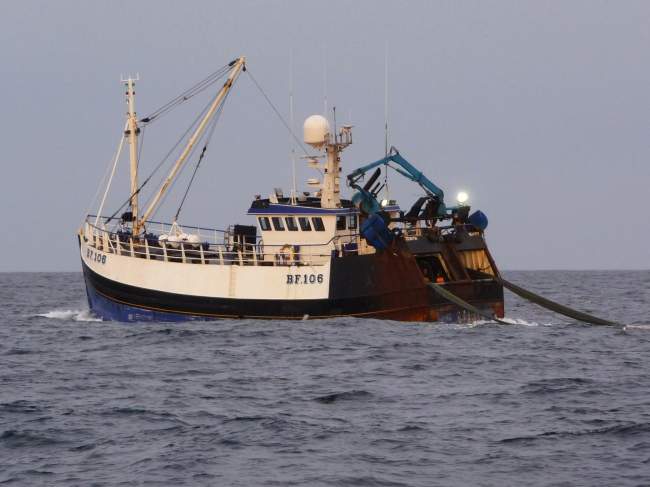
No longer are the ropes manhandled or nets hauled by hand, nor are the crews, in most of the new built boats at least, working on open decks.

There are still breakdowns and the crews still have to do as many repairs as they can manage, as there are no garages or engineers out there that they can call into to get things fixed, and a long steam home to get repairs done means wasted fishing time.

When I was at the sea and some of these changes were taking place, although welcomed, we took the progress more for granted, like watching a baby grow. The stages came one at a time, or in some cases when you crewed on a more modern boat the equipment was there and although accepting the benefits you never really took much notice of the change as you were among it all the time.

It is only now, when remarks are made, like the comment in regards to my photo that I can look back in amazement at just what we really went through in comparison to the fishermen of today.

The boats are all closed in, and nets are either hauled by power blocks or net drums, but when I look at the size of nets that are worked now, there is no way we could have hauled them by hand.

The modern equipment has allowed the boats to work bigger and heavier nets, the shelters over the decks have made it safer to work in rougher weather, but the danger from the sea still lurks, and boats and men are still lost.

We did used to get heavy objects in the net, objects that were not only too heavy for us to haul the nets, but also dangerous objects like bombs left over from the wars.
In these cases we would improvise and fleet the net up feet at a time with our lifting derrick which could take hours, depending on the sea conditions and if a bomb or mine appeared we would have to either cut the danger away and take the Decca readings of it, or tow it into shallow water, dump it and alert the Navy who would then send men out to blow it up.
Either way, hours of fishing, or at worst a whole days fishing, plus the net would be lost, costing us a fortune with no compensation coming from anywhere, only the hope of good catches for the rest of the trip to make up for it.

I can visit harbours now or look at photos on the websites and be amazed at the boats now, but I never think, we had it any harder then, because no matter how modern the fishing gets it will never be an easy job.

I can remember my uncle saying to me one day as I moaned while struggling to keep my feet on the deck as I coiled ropes by hand, sea spray thudding off the back of my head and knowing we had the coiler to fix as soon as the net came up, "I don't know what you are moaning about, in the old days the crews had to coil the ropes by hand every haul."

Aye the old days were always worse I thought, but it wasn't any consolation to me at the time, nor will it be any to the boys who still have to go through hell to put fish on our tables.

The only consolation we get or in my case got, was the fact that it was my calling, I loved the job, the adventure each day brought and the variation each day threw at us, be it breakdowns, bombs or big fishing, rough seas or smooth, we were never bored.

I don't know how much more modern equipment, or how many more changes will come and improve the fishing industry, but I do know some skipper in the future will say these words to one of his crew when things are getting him down, "I don't know what you are moaning about, you should have seen what I had to go through when I was a boy!" and the rookies at night will listen in amazement to the tales the old boys will spin of days gone bye,

Some things never change!

Top picture. ( Me at the seine net posing. Open decks, fifty foot boat.)

Bottom picture. (The Zenith trawling all enclosed decks, bigger boat.)


Enhanced by Zemanta

Tuesday, 9 November 2010

White horses.


Gulf stream mapImage via WikipediaThe past couple of days have seen cold easterly gales blowing across Britain which brought back memories to me of numb hands, spray from the salt water, freezing as it landed on the deck, stinging my face as it battered into me while fishing off the west coast of Scotland.

It was mostly south westerly winds that we had to contend with which blew from the open Atlantic Ocean causing huge waves to build up as they journeyed across that vast expanse of water making our job all the more difficult and dangerous than it already was, so you would think that when the wind blew from the east it would make life more bearable for us,.................. not so.

Southwest winds reach us on the Gulf Stream, coming from the region of the Caribbean Sea and although they bring plenty rain and storms they are quite warm in comparison to easterlies, as the easterlies come from the frozen Baltic climates mostly in winter bringing snow and ice.

It shows that there are hazards to fishermen regardless of which way the wind blows, as while some shelter can be gained with the wind blowing off the land creating smaller waves, these waves have what we called "white horses" at their crest which break constantly over our bows and across the deck when steaming and carrying out our tasks on deck, so much so, that we spend the day soaked to the skin with freezing water running through us even though we have oilskins and sea boots on.

The day begins in the early hours of the morning when we are about to sail, hauling in mooring ropes that are thick with ice and cannot be coiled, so we have to manage them as best as we can until we leave the fresh water of the river Ayr and reach the salt water of the sea where the ice slowly melts enough to allow us to coil and stow them safely.

The icy wind will be howling and the rigging rattling and shuddering as we plough our way through the sharp seas with spray and spindrift blinding our view at times, but with the reasonable shelter we get from the land, the seas are workable, so another day of hell begins.

Although you are not diving into deep troughs, the boat ploughs on into the sea like hitting brick walls, throwing the icy spray across the deck and when it hits your face it feels like nails being hammered into your skin, so you try to keep your head down as much as possible, but it is not so easy to do when you are among shoals of fish that need gutting and washed just like any other day.

Our hands, like our faces become leathery and hard, which is just as well, but that did not prevent the blood to stop reaching our fingertips or other extremities when it got extremely cold, leaving our fingers numb when standing gutting the fish, our feet, feeling as cold as the lumps of ice relentlessly thudding into us each way we turned, as if bullets from a machine gun were being fired at us from the constant freezing spray that showered over us and swirled around our feet.

When our hands are as cold as this you feel no pain, barely feeling the knife you are holding, so it is easy to cut you fingers which happens on a regular basis and the blood, if any, is mingled with that of the fish, so it is not until you wash your hands allowing the blood to flow freely again, once the decks are clear that you see blood pouring out of a wound that might need attention.
Our hands are always covered in cuts, the cuts are usually in the same places where the knife cuts the guts of the fish against our thumbs, or on the opposite thumb where we hold the fish by the gills slicing down its belly turning the knife back up to scoop out its innards after severing their stomachs,sometimes slicing our own fingers along with it.

Justice some might say, but as long as people want to eat fish, mankind will catch them.

Even with badly cut fingers the work goes on, and during the winter months when the easterlies blew, haddocks were the mainstay of our catch.
The haddocks fed on shellfish that lay on the seabed which meant that their stomachs were full of sharp pieces of shell still digesting in their bellies, and during gutting the shells would rub away the skin between our fingers until they too bled, and at the end of the day our hands were in a sorry state.

When your hands warmed up between hauls the blood would slowly come back to the tips of your fingers which brought pain of a different sort, not knowing whether to laugh or cry or where to put your hands to ease the agony somewhat, which was nigh impossible anyway. It was a pain that is hard to describe but if you have ever smacked an object hard with an open hand, or received six of the best with a strap from your teacher at school, multiply that pain a hundred times.
If you don't believe me and want to experience it, lift a block of concentrated ice,(not really advisable) and if it doesn't stick to your hand the blood will immediately rush to your fingers, to combat the sudden cold, creating a burning effect and as it surges to the tips it will give you the excruciating pain we went through every day when the easterly winds blew in winter.
(I was stupid enough to lift a block of concentrated ice when I was young, so I know what I am talking about.)

Gloves might have been a good idea, but they slowed us down too much when working with the fish, even so, your hands still got numb in them anyway, and as it turned out, our hands became tougher then any glove we tried.

When sailing time came again, we tumbled out of our cosy bunks straight into the icy blast of wind howling through the rigging, the corrugated iron roof of the fish market rumbling in the wind as it threatened to take flight. Our hands were stiff and sore as they had dried out overnight leaving them tender to the touch until they were saturated in water again, and when we let go the iced up mooring ropes we could hardly bear to touch them as we hauled them aboard, then out into the white horses where the torture would all begin again.

My party trick when I was ashore among landlubbers was to stub cigarettes out on my hand to show how leathery they were which always proved popular, and drew gasps from the ladies.
Yes I was proud to be a fisherman, following in the footsteps of my grandfather, and I knew I had to take the good with the bad, be it high seas with deep troughs or cold easterlies with their white horses, we consoled ourselves thinking of the warm summer days ahead, or the thought of downing a stiff whisky when we hit the pub.

I had to live and work in conditions that horrifies shore workers and in conditions that I would not be allowed to work in if the strict health and safety laws ashore applied, but then again if ever they were applied there would be no fishermen, because there is no way we can beat the elements regardless of human laws.
Most new boats have decks that are covered over in the working areas making the job much easier, but even shelter decks, though they might divert the freezing wind from your face, won't prevent the cold from penetrating your body when the easterly wind is screaming through the rigging.

I have been retired for some years now, given up smoking and trying to impress women, but my memories of those cold stormy days are still vivid, and are rekindled when the easterlies blow. Sometimes even when my hands feel cold when working at the sink under the cold water tap, I begin to wonder why my face is still weather beaten and leathery whereas my hands have softened somewhat, but you still will never get me to wear gloves, especially the yellow marigolds that the women wear.
I might not be as tough as I used to be, but I have not gone completely soft. ha ha.
I would rather grin and bear it just like the old days, and although I don't cut myself so often, my hands still bear the scars from yesteryear, a reminder to be careful when using knives.

Enhanced by Zemanta

Tuesday, 9 March 2010

The shoals of cod.

The round Ailsa Craig on the Waverley Paddle S...Image via Wikipedia


There was still a cold winters chill in the breeze that blew off the sea on this March afternoon as I strolled along my usual haunt at Ayr beach, bringing back memories of the cod fishing around the Ailsa Craig at this time of year.

Although there was a breeze blowing the sea was calm, and had been for weeks now, something that did not seem to happen during the cod fishing when I was at sea, as I remember vividly getting tossed about every day with lumps of sea crashing down around us as we gutted cod continuously from daylight to dark, our hands freezing from the icy blast that whipped up the waves.

It was always after a cold winter that the cod were at their thickest, and as this was the coldest winter we have had for years, I was wishing I could get down to the fishing grounds to see for myself if there was any cod left to catch, as a few years ago, the European Union put a stop to fishing for them during the spawning season to try to replenish the stocks that had seemingly depleted over the years.

The cod came into the Firth of Clyde every year at this time to spawn bringing boats from all the fishing ports around the coast of Scotland to cash in on this bonanza.
For around three weeks of March the cod were at their thickest, small catches appearing just before the main flood, and then again, after they returned to the deeper water, making the season last for about six weeks in all.

Each night Ayr harbour was full of fishing boats waiting to squeeze into a space at the quay to unload their catches to the eager buyers who, although the cod was plentiful, would try to out bid each other to acquire the green gold that could make or break their year, also for the fishermen whose livelihood depended on the shoals, and getting the best prices possible for their fish.

It is hard to believe that these shoals do not come here anymore, because even though they took a slaughtering, year after year they would return in greater numbers to go through the process all over again, until one year the numbers started to decline.

The winters had been getting warmer, and we had started to catch the cod in the deeper waters where they returned to after spawning, but we always believed that there were plenty more fish in the sea, so we carried on regardless, after all we were there to make money and that was what we were doing.

As I mentioned in an earlier post, we began to catch cod with both male and female reproductive organs inside them, and I often wondered if that was natures way of making sure they survived.

The grounds around the Ailsa Craig where these cod used to shoal, have not been fished for some time now, and given the conditions of this winter I would love to be able to have a couple of experimental hauls just to see if the warmer winters was one of the reasons the cod started to dwindle, or if it was the damage caused by us that depleted the stocks so much so that there came a point of no return.


Having kept all my hunting instincts even though I left the fishing years ago, I still think there are plenty fish in the sea, and that the cod found another place to spawn during the warmer winters, and now that we have had a cold spell just at the right time, my instincts when I walked along Ayr beach yesterday with the chilly breeze hitting my face told me the cod were there.

Whether it was just the smell of the cold sea air bringing back memories of the good old days, or my instinct I'll never know, because I'll never get to prove it one way or the other thanks to the laws of the European Union, which in this case might be good or bad. Who knows?

The yearning for these days, and their memories will never leave me, and no matter how many walks I take on a cold March day, this year or in years to come, I will be down at the fishing grounds around the "Craig" catching large hauls of cod, and there is nothing the European Union can do about that.


Reblog this post [with Zemanta]

Sunday, 28 February 2010

A painful reminder.


Some typical alcoholic beverages.Image via Wikipedia

One day when we were fishing off the lighthouse that serves the south eastern corner of Arran, warning the many ships on passage to, or from the Clyde ports of the danger from the island "Pladda" which lies close to the shipping lane, we were contacted over the radio by the captain of a passing coaster who wondered if he could get some fish in return for some whisky.

These ships are called coasters because their routes mainly take them around the coast of Britain, sometimes travelling to European ports, but never venturing too far afield, across large oceans, although they are big enough to do so.

This particular ship towered above our small fishing vessel, but kept a safe distance from us even though the sea was calm, while he waited until our haul of fish was aboard.
The fish we were catching that day consisted mainly of whiting, with a few boxes of large cod and the odd plaice through them, which was all adding up to a good days work.

It would have been about mid-day when this event took place, giving us a welcome break from our routine of constantly shooting, hauling and clearing up one lot of fish just before the next lot came aboard, so when the exchange of whisky for some fish came, the offer was hard to refuse. Not that it would have been refused at any other time, as I am sure you know.


Once the net was safely aboard we edged as close as we could to the waiting vessel, keeping just enough distance between us to allow their crew to lower a rope down to us where we had a basket of mixed fish waiting for the rope to be tied to then hoisted up, emptied, and returned with the whisky.

Sure enough when the basket was lowered back down to us there was three bottles of a good malt whisky (Ballantine's) in payment for our fish.

Great whisky! We all adjourned to the galley where we all indulged in half a mug of this amber nectar before carrying on with the rest of the days fishing.

AH! It was a good dram, heating the cockles of our hearts, putting a glow on our cheeks and giving us an energy boost to continue. (I'll call it that anyway.)

As soon as I was back on deck I delved my hands in among the fish to pull out any large cod and put them into separate boxes from the smaller fish to give us a better idea of how much quality fish we had.

Just as I came across a big cod, I felt a sharp jag at the tip of my middle finger on my right hand, just under the nail, but thinking nothing of it I carried on, as quite often we would get jags from the barbs that grew on some of the species we caught, like the gurnard.

Our hand were always leaking blood from somewhere, between cuts from our knives, or scrapes and punctures from the defensive armour of fish like the gurnard who had spikes coming from various parts of it's body, and spikes that I had often experienced jagging into me.

When the working day came to an end and my hands began to dry out I could still feel the niggle from the jag I received, and on examination I could see a black dot under my skin which meant the spike had broken off, so I tried to squeeze it out but to no avail.

Usualy this does the trick, but as half a day had gone past the skin had started to cover over the wound, trapping the spike under my skin, so my next move was to cut around the spike and try to squeeze the, by now very sore and irritating intruder in my fingertip.

Nothing worked, the spike seemed to go deeper instead of coming to the surface, so I gave up and turned in for a good nights sleep, but that too was disturbed by the throbbing of my finger, and even after getting up during the night to take some pain killers I still could find no comfort from the pain.

I worked all the next day with it, and as the day went on the pain seemed to ease, probably due to the coldness of the water my hands were constantly in, then we were off ashore to land our catch, and as my hands dried out the pain returned with a vengeance.

After we landed and everything was ready for the next trip, I took myself up to the outpatients department at the local County Hospital where my finger was x-rayed only to be told that the x-ray showed nothing, and there was nothing they could do, but the throbbing in my finger told me otherwise.

It was a week later, at the end of the next trip, after getting little sleep through the pain from such a small spike, that I visited my own doctor, who on examining the source of my pain decided to freeze the whole finger and cut open the tip with a small scalpel.

By this stage I would have let him operate without freezing my finger, but he insisted, and after three injections he decided that my finger was numb enough to begin.

He started with small slices, working his way in, creating as neat a hole as I have ever seen, until I jumped, withdrawing my finger from his grasp as I felt the scalpel touch something.

The doctor poked away with a needle for a couple of seconds at the spot that had made me jump, then withdrawing it showed me the offending spike.
It was barely visible on the tip of the needle, but there it was, the smallest thing you could imagine, but none the less had caused me no amount of pain.

As it turned out, the small tip of the spike had lodged itself beside a nerve in my finger, which had caused the throbbing pain, and the relief was immediate as soon as the offending intruder was removed, even though my finger was still numb.

It was hard to imagine how such a small thing could cause so much pain and discomfort, and it brought to mind the story of the little boy who removed the thorn from a lion's foot, with the lion being so grateful he befriended and looked out for the little boy from then on in.

Well I can tell you,I now know how that lion felt, and that I felt the same way for the doctor who relieved me of my pain, although I did not go as far as looking out for him from then on in.
Someone who can carry out such a delicate operation with such skill and understanding of his patient needs no help from a lowly fisherman such as I, but he is still practising at the same surgery that I go to, and as long as I live I will always be grateful to him.

I carry a small scar on that finger, and it is a reminder that it does not need to be the big things in life that can give us the most problems, sometimes it's the smallest irritations that are the hardest to bear.

(The Wanderer was bigger than these punts seen in the top picture, as you all know, but I just thought I would show you a photo of a coaster.)
Any old excuse to show boats, now the whisky......just savour that too.


Reblog this post [with Zemanta]

Monday, 15 February 2010

My fifteen minutes of fame.


Once the Wanderer was up and running with all the trials out of the way it wasn't long until we started breaking the port record time and time again, so much was her catching power. The experience of the crew, also contributed to the feat, because without a good crew, no matter how efficient the boat and skipper is you will not have success.
The local paper "Ayrshire Post" wanted to do a feature about the fishing fleet that worked out of Ayr, so who better to sail with for all the information they needed but the top earner of the port.

We were sailing at midnight during the summer hake fishing,so the Ayrshire Post editor sent a reporter and a photographer out with us for a two day trip to get enough information to fill the centre pages.

Sure enough right from the first haul coming aboard it was obvious that there were plenty fish to be had, and with just a gentle breeze blowing, the boat was only rolling about slightly, but not slightly enough for the photographer.

As soon as the breakfast was dished out and he entered the galley, he immediately turned around and was seasick over the side, which brought back memories of my first day on the Olive Tree, only I had been out in a force ten gale, this was just a breeze, but the motion affects people in different ways, so I did have some sympathy for him.

As the day went on he felt better and began taking photos of the crew, trying to relate the photos to the story the reporter was writing which helped to take his mind off the slight pitching of the boat.

We had a bit more fun with him when a Gannet hit the mast and landed on the deck when we took it over to him and told him to take a photo of it, and with the Gannet's beak snapping away he took off into the galley dropping his expensive camera among the fish he was about to photograph, giving us a good laugh at his antics.

The reporter, photographer, and camera survived managing to do a good job and two weeks later our stories and photographs were plastered across the middle pages as promised.

It surprised me somewhat just how many people who knew me had read the story, and approached me about the spread, the following weekend when I was ashore.

An old headmaster who I hadn't laid eyes on since my primary school days spied me and stopped to talk, asking all sorts of questions about the story and my job, telling me how proud he was of me, tackling such a tough job, and being so successful at it.
He had also come from a fishing background, but chose to teach, and never knew I had a similar background, and salt water flowing through my veins until he read the story.

That was just one example of what happens when you get your fifteen minutes of local fame, I seemed to bump into people who I had not seen for years, and of course a conversation would start about the newspaper article.

National fame beckoned,(or so we thought) during the winter when a TV station was making a serial which needed filming done at one of the main trawling ports, with a good catch being landed, one of their main priorities, to make it realistic.

Ayr not being a trawler port as such, made do, being closest to their studios, and with us landing that night they were guaranteed to get the large catch they needed to make it look as if it was filmed at a port like Aberdeen.

Word reached us over the radio, before we entered the harbour that they were there and wanting to film us coming in, our catch being landed while two actors walked past talking to each other.
Then the next scene was in the fish market where our fish lay spread out waiting to be sold, with us still running in adding more boxes.

All the filming of us consisted of the boat docking, "where the crew all posed" we weren't asked to but we did, weighing the fish and running into the market with the actors standing waiting to buy them, then even more filming of us when we were loading the empty boxes and ice aboard for our next trip.

We were at sea when the program reached the TV screens, so we made sure our partners recorded our acting debut for us to keep and show friends and relations in the years that were to come, something even more for my headmaster to be proud of, if he happened to watch it.

The first chance I got I put the tape in and settled down to watch, glass of Bacardi in one hand and my cigarettes at my side for the hour long program.

The scene where we entered the harbour came up quickly, but it wasn't the Wanderer that docked, it was another Ayr boat that was built of steel and looked more like the trawler they needed.

When the two actors walked past us it was filmed in a way that blocked us out, and even the market scenes showed no signs of our crew, only a few harbour workers and the salesmen.

The only fame I had from the filming was the large catch of hake waiting to be sold was all boxed and iced by me, and nobody but me and the crew would ever know.

Ach fame is not all it's cracked up to be, just think of the amount of times I would have got stopped in Ayr if they had shown us posing needlessly as we docked, and if the headmaster was content enough with the write up in the Ayrshire Post, then so was I.

(top photo) is a picture of me taken by the Ayrshire Post photographer after I had pushed about a dozen baskets out of the hold, then he asked me to pose with one. Hmmmmmmm.

(The next photo) is just to give you an idea of a fish market during sales.


Reblog this post [with Zemanta]

Wednesday, 3 February 2010

You can't keep a good man down.


So much for the threat from the skipper of the Girl Margaret, that he would see to it I would never work at the fishing again, his ego was bigger than his capabilities, as I was offered a job immediately, on a spanking new boat "Wanderer 11" that was due to be launched at the beginning of 1976. Meantime I filled in my time working on one of the top earners that fished out of Ayr "The Terra Nova" until after the launch, making more money at home than I was on the Girl Margaret, so much so that the skipper of the Wanderer kept coming down to make sure I was still wanting to sail with him.

This new boat "Wanderer 11" was more than I could have wished for when dreaming of improving catching capabilities, as it had every mod con a fisherman needed for the job, and was seventy feet in length, with every inch utilized to the full, plenty deck space, and plenty room in the fish room to hold all the large catches we secured in the years to come.

One of these large catches consisted of the "dogfish species" I wrote about in my last post, and in this case we caught over twelve hundred and fifty boxes in one, two hour haul at the seine net.

The dog rope I mentioned in my last post, is a rope that is attached to the cod end, and runs along the length of the net to the tip of the net wing, where we can reach it as soon as the net surfaces, allowing us to handle any such heavy weights like this haul of dogfish, or the bombs I wrote about in earlier posts.

This was our second haul of the day, having caught sixty boxes of dogfish the haul previous, but when this lot appeared we knew we had a different task on our hands getting them aboard than we had before, as they were crammed in tightly all the way down the bag.

Dogfish have very rough skin, and if you run your finger along it from the tail up, you are in danger of drawing blood, as it is capable of cutting into you, also they have two very sharp pointed spikes on their back behind each fin which can penetrate deep into whatever part of your body it happens to come into contact with if you are not careful, the only consolation being, if any, they have no teeth.

The fact that their skin is so rough makes it harder to run them down the bag into the cod end, and there being so much bulk of them this time, it was impossible to move them, so after hauling the first lift aboard with the help of the dog rope, the rest were stuck fast all the way up the bag, with no way of maneuvering them into the cod end for another lift.

We were fortunate that it was a beautiful, calm summers day, or the weight of the dogs would have burst through the net with the surge of the sea. We were also fortunate to have lifting derricks both forward and aft, the one aft used while seine netting, and the forward one placed there for use if we ever went to the herring fishing.

We were lying drifting with one end of the net in the power block, and the other on the deck where the empty cod end lay with no way of filling it, and in between, a mass of dogfish that if landed to the market would fetch enough money to cover our expenses and give us all a very good wage.

The only option we had was to lift the cod end high on the forward derrick, and secure the other end of the net to the stern of the boat as best as we could, then cut the net on the middle of the bag, just enough to let two crewmen stand on the mass of dogfish and throw them aboard manually.

The first two to try it was the youngest members of the crew, who were the lightest among us, also the most foolish, or gullible given their inexperience, did so willingly with a rope tied around their waist, and fastened to the boat..........just in case the net DID burst under the water, and there was a sudden evacuation of dogfish, and men from the net.

This trick worked fine, and as we emptied the bag, by this time taking turns inside the net now we knew it was safe, the catch was soon mounting up on the deck where they were washed, thrown down the fish room and boxed.

By the time we had about half of them aboard, we managed to strap the bag up along the side of the boat between the aft, and forward derrick, and bring the remaining catch to the surface, but still they wouldn't run down the bag, so we had to keep cutting the net, throw the fish onto the deck, temporary lace (repair) the hole we were cutting in the net as we went along, making sure we were safe enough standing on the solid mass of dogfish, and as the day was quickly passing we had begun to steam slowly towards Ayr, to try and catch the market before it closed.

It was quite amazing how well the task went, and we all survived without anyone of us plummeting to the bottom among a shoal of dogfish, but we all did bear the scars of the spikes as they frequently jabbed into us during the procedure.

Not one dogfish escaped, and by the time we reach Ayr most of them were boxed, with the remainder being boxed during landing, over thirteen hundred boxes in all, for just two hauls, but two hauls that took all day, and well into the evening before we were cleared up, ready to mend the net, and sail back to where we caught them.

When the first haul of that next day came up we were all glad to see that it was a pleasant haul of white fish that broke the surface, fish we could handle without standing on top of them while they were still in the bag.

As for the dogfish, we either caught them all that day or the rest scarpered, after seeing the fate of their chums, as we never saw that kind of bulk in one haul again.

The story in the last post happened a few years later, but it never proved to be as difficult as that day, there being less dogfish, and not so crammed into the bag, which allowed us to run them into the cod end after each lift.

The memory of my experience on the Wanderer did enter my head that night on the Boy Peter, and although I suffered with jabs from the spikes, the ordeal, even with the shortage of cigarettes, was nothing in comparison, but the stories are ones I thought I would share with you, letting you know the lengths fishermen go to, and the other dangers they put themselves in to land their catches.

Top photo (The Wanderer 11 in her first year. She was updated on a regular basis with a shelter deck added, and rope reels replacing the original rope bins. Had the shelter deck been added at that time, it would have made our task much more difficult.)

Second photo is of "dogfish" but not swimming in shoals of the amount we caught that day. ha ha.


Enhanced by Zemanta

Tuesday, 17 November 2009

Aches, Pains and other ailments.


My journeys home were becoming less frequent, as the best opportunity to get there was hitching a lift on one of the Ayrshire herring boats that would be working in the same area as us, heading home at the weekend,and returning to the same area on the Monday evening.

As the herring fishing spanned almost all of the firth of Clyde, the chance of these lifts were few and far between, but one night, after dodging about looking for the elusive herring, we found ourselves over nearer the Ayrshire coast, and as daylight was almost upon us we thought it was going to be a fruitless venture with not one net having been shot all night,and no herring being spied by our modern equipment.
We were just about to head for Campbeltown when the skipper of the Alliance called us over the radio to come alongside.

We had been separated by a couple of miles in our search for the herring, trying to cover as much ground as possible, and with still nothing to be seen we headed over to find out what he wanted to say that could not be said over the radio.
The skipper of the Alliance was due to retire, and hand the running of the boat over to his three sons who had followed in his footsteps, but he had come up through the ranks in the days before sonars, and fish sounders, and knew how the fishermen of old found spots of herring.

When we drew alongside he shouted to us that he was going to shoot here as there was plenty herring beneath us, and the reason he did not tell us over the radio was to keep other boats in the area from converging in on us, and getting in among them before us.
The fish did not show up on the sonar, (which scanned a vast area,) perhaps because they were too deep or where they were lying, maybe next to rough ground, but they were now showing up on our sounders that only showed what was directly beneath the boats.

It was a beautiful calm moonlight night when the Alliance shot his gear, and once we had towed through the spot twice we lifted our nets to find we had been successful in our quest for the silver darlings.

Another reason why they are called silver darlings is because when at night if the shoals come close to the surface, they disturb the phosphorous in the water, making the water glow white, which was one of the signs the crews looked for in the days before sounders, plus the herring gulls diving in among them, attracted by the same glow, some of the signs the skipper of the Alliance would have been brought up to look for.

There was enough herring to fill the hold of the Alliance, and this time when they came aboard I managed to keep my feet on the rubber matting we had lain down after my last escapade.

Once the hold was full, and the net stacked, daylight had broken, so it was decided, as the fish were on the small side, that the Alliance would head to Ayr with the catch to try and fetch a better price, and the Girl Margaret would head back to Campbeltown, meeting up with us at night again.

They all looked at me and said almost in one voice "Aye and Donald can get a wee spell at home with his wife."
I thought I would have to wait and land the catch before I would be allowed home for a couple of hours, but no, as soon as the ropes were tied to the quay, they told me to head off and make the most of my time in Ayr, which I did.

My wife was very surprised when I arrived home unexpectedly, as there was no mobile phones in these days, but she prepared a meal while I steeped in a hot bath of pine radox crystals, which was very relaxing having been deprived of the luxuries of home for a couple of weeks.

Bath and meal over we retired to bed, not just to sleep because with my son being at school it gave us a little time to ourselves before he came home.

I did get a quick nap before he came home, and just a little time to spend with him before it was time to head away again.

On the way back across to meet up with the girl Margaret, I felt an itch over my body, and thinking it was the heat in the fo'c's'le, I took off the clean woolen polo neck jumper I was wearing, but the itch only got worse.

By the time we met up with the Girl Margaret my body was all red blotches, but I had no time to bother much about it when I jumped aboard because we had spotted a shoal of herring right away.

The gear was shot from the Girl Margaret, and after towing through the shoal three or four times we lifted to find enough herring to fill the Girl Margaret, and half fill the Alliance.
It was a cold night and I had to put on my jumper again, but once we filled the hold of the girl Margaret I jumped aboard the Alliance to give them a hand to spread the catch evenly across their hold, doing my job of opening the cod end first.

We headed back to Cambeltown this time and as I worked up a sweat the itch returned with a vengeance, making me shed clothes, until I was stripped to the waist, which covered my body in herring scales, but at least they cooled it down a bit.

I was still itching after we landed,and after spending the most uncomfortable night I ever had at sea, I decided the best thing to do was to head to the nearest pharmacy to see if they could help me as I was not registered with the local doctor.

After asking me a load of questions, of my allergies, any drugs I might be on (prescribed drugs I'll emphasize in case you get the wrong idea) he was still puzzled until I remembered and mentioned the "pine radox bath" I had the afternoon before.

"That could be it" he said, "have you ever used the pine crystals before?" he asked.
"No that was my first time" I said, so he gave me a cream and a green liquid to cover my body with, to see if that would cool me down a bit. (Well it was cleaner than herring scales)

It turned out that I was, and still am allergic to these pine crystals, and most probably any other pine mixture on the market, so from then on I stayed well clear of anything with the hint of pine in it never wanting to go through that experience again.

The fishing is bad enough when you are feeling fine, but its the worst place to be when something is ailing you as you are so far away from land, comfort and cure.

It was only an itch I had that time, but I did endure toothache once, when I was still on the Olive Tree, which was a thousand times worse, and resulted in cutting the trip short to get the offending tooth, plus the abscess removed along with it, with a dentist standing by, arranged ship to shore, through the Seamans Mission.

All so dramatic, but most welcome when you have had to endure the severe throbbing in your mouth for hours on end with no respite, and the thumping of the boat into the seas adding to the agony as it thumped in rhythm with the throbbing of my tooth.

If only I had been a landlubber I would have had this out by now, was my only thoughts as we punched our way through heavy seas, until finally land was spied, the harbour reached, and the dentists chair a welcome sight, even the needle held no fear as all I wanted was the pain to go away.

It was all over in no time, the dentist showing me the tooth with the abscess attached, telling me he pulled both out together which was unusual as they liked to get rid of the poison first, rather than attempting the dual extraction, but it had gone well, and I strolled into the nearest pub on the way back to down a whiskey. (purely as an antiseptic of course. Ahem!)
I swilled it around the gaping hole left behind, another two for luck, and it was back to the boat and away to sea again, the pain of the toothache gone, but another hard trip ahead of me.

There is more to consider than the dangers of a storm, or the other dangers the fishing holds for those who dare go down to the sea in ships, but it is comforting to know that there is the backing ashore, between the lifeboat crews, and coastguards, to the Seamens Mission pastors who are on hand to assist us when ever they are needed.
Needed they are, all to often, as the sea is one of the most dangerous places to be, be it calm or stormy weather, and no amount of praise is high enough for those in all the rescue services who risk their lives for us.

Tuesday, 27 October 2009

This was a new kettle of fish. (nice pun)


Davaar_Island at the mouth of Campbeltown Loch.
We sailed down
Campbeltown Loch at one o'clock on a beautiful Monday morning, the darkest hour before the dawn, as they say, the familiar lights of the marker buoys flashing on and off guiding us down the channel, and rounding Davaar with its powerful lighthouse beaming and shimmering, silvery across the rippled sea.

Davaar was the Island at the mouth of the Loch, and helped to shelter the Loch and harbour, sights and scenes I had come to know so well during my fishing career on the Olive tree, having had to use it as a safe haven many a time.

This morning was special though, I was on a strange boat with a crew I knew only from socializing with them ashore, which is completely different from working with them, and a new layout of working platform, plus the synthetic ropes to conquer (a story for another day) before I could settle down to a new routine.

An hour out to sea and daylight was beginning to break, the fishing grounds for the hake were close to Campbeltown, and as the first rays of sunlight appeared over the eastern horizon, we were ready to shoot the gear for the first haul of the day.

Not only was the boat new to me but this crew also, and the seine net fishing was a job they hated because it was hard work right from the word go, until the last fish was iced and packed, last thing at night.
During the summer months in Scotland it could mean working at sea from two in the morning until ten or eleven at night, not counting steaming times, and with the long days it could mean lying drifting between the darkening hours, grabbing a little sleep, before the next sunrise, all new and despised by this crew who were more used to trawling or drift netting where sleep was more plentiful and work less so.

The boat was like a new toy to the skipper too and as the first side of rope was almost out, and we reached the time to turn and make our bight to shoot the net, I saw a grin come from his face as he exchanged glances with another member of the crew.
As he turned the wheel hard to port the boat lurched to starboard, catching me off balance, and making me hold on to prevent myself falling on my butt.
The sheer power from the Bodwin engine combined with the higher wheelhouse had made the boat heel over as we turned full speed, and although the Olive Tree had been fast it could not match this power.
I was aware of the skippers tricks from then on and was always prepared for the lurching of the boat after that, but I was glad to see the crew had a sense of humour.

The first catch of the day burst to the surface as we towed the net up ready to haul it aboard with the hydraulic power block, and as we placed the sweeps into the wheel the big fat, air filled bellies of the large hake could be seen floating all the way down the bag.
As we hauled away we watched as they slid down to the cod end, which bulged and filled, as they packed in.
The cod end was swung round and emptied into the deep pound, situated above the engine room, and as it was brim full we started gutting the big fish straight from there, and throwing them onto the forward deck to be washed, a procedure common when working with big fish, while working with smaller types they would be boxed first, making it easier for the crew to work with.

Although the crew were good steady workers they were not going fast enough for my liking, them being used to the more relaxed pace of the jobs they had become accustomed to, which put more work onto me, and after the gear was shot again, we still had plenty to do, in the hour and a half before it was back up again.
It was when we reached the bottom of the pound I noticed the fish were getting warm, some beginning to stick to the deck, and it was then I realized one reason for their fish being condemned the week before.
Between the heat from the rising sun, and the searing heat coming up through the deck from the 500 horses the Bodwin engine was throwing out,the slow pace of the crew,(another reason for condemned fish) the fish were beginning to cook on the deck before we reached them.
I managed to salvage them all, but two large hake, and then went down into the hold to box and ice them as the cook washed and threw them down to me,the two others by this time needed at the rope bins to guide the ropes in a neat pile ready for shooting again.

I just managed to box and ice the catch when the net was up again, big silver bellies floating all the way to the cod end once more.
This time we boxed all the fish as quick as we could, and at last I saw some haste from the crew after I pointed out the cost to our pay packets if we allowed the fish too much time on deck.
Their gutting got faster but not as fast as I was used to, so it meant more work for me, but I took it in my stride and the day went on much the same, me gutting, shooting gear, boxing and icing in the hold, taking a spell at the bins now and then, non stop until the last haul was aboard.
I was used to it but I was also used to the workload being shared a bit more evenly, and never had time to think about my athletes foot throbbing inside my sea boot until it was time to rest and eat something, before grabbing some sleep.

When I lay down, every bone in my body was aching, and my foot red hot with pain, I thought to myself "this was supposed to be easier with all the mod cons, not harder" but it was not long until I was sound asleep, helped by the gentle swaying of the boat as we drifted on the tide. (not that it was needed.)
The watch during the three hours drifting had been shared by the other members of the crew, an hour at a time, allowing the skipper and me a full three hours.
At least I had been spared taking a watch, perhaps they had appreciated my hard work after all.
The Bodwin engine droned away all night but the noise faded into oblivion along with my pains, and in no time at all it was all go again.
The big fish came aboard from the start and all I could see were pound notes, with every fish that passed through my hands, which was every fish we caught, as I gutted most of them, and boxed them all, but all the crew could see was hard work.

We had less hauls the second day as we were heading to Ayr market to land, giving me a chance to grab another hours sleep after the decks were cleared during the three and a half hours steaming time.
The market at Ayr took place between the hours of five in the evening til seven in the evening, two hours in all, but it gave us ample time to get some good hauls in then go and land.
Land we did, the biggest catch of hake landed from one boat, at one time ever in Ayr,(at that time) and not one fish condemned.
The buyers knew I had changed boats and knew my fish would be in good order, hence the top prices that night, which put a smile on all our faces, and renewed my strength, plus the fact I had laid my hands on the cream the skipper ordered (ship to shore)for my athletes foot.

I had no time to visit my wife, but managed a couple of drams before grabbing another nap, and after covering my toe in cream, did just that.

The next two days ran along the same lines, with the crew going at a steady pace and me breaking my back, but the cream was working a treat even though the crew weren't, and the weather was perfect.
We landed a bumper catch on the Thursday night again, and after loading up with boxes and ice, I left the crew to moor up while I went to fetch the "docket," a statement of the prices and what we had made for our catch.
I was handed a bottle of whisky along with the docket, and told it was for smashing the port record, a big contrast to the previous week when they had half their catch condemned.
I couldn't hide the grin on my face as I held it aloft on approaching the boat, where the roar could be heard the length of the pier from the crew when I told them the news.

The neck was screwed open as soon as my feet touched the deck, it was downed among the five of us rapidly, before we hastily adjourned to the pub where we celebrated until closing time. (ten o'clock in these days)
A carry out was purchased to drink on the boat, but as the clock neared half past eleven, I took my leave and headed home in a taxi to spend a couple of days with my family before it all began again.
The Girl Margaret left Ayr and headed back to Campbeltown in the early hours of the morning once the crew had sobered up enough to sail, and I rejoined them this time at sea on the Monday morning, having hitched a lift on another boat, "The Alkaid," a boat from the east coast who fished our waters during the hake fishing, and who's crew travelled back and forth from home to Ayr by car, leaving their boat in Ayr over the weekend and left for the same fishing grounds I was headed for to start all over again.

(Try as I might I cannot find a suitable picture of a boat like the "Girl Margaret", But "The Wanderer" pictured above, a boat I sailed on in later years is the nearest I can get, although it is bigger than the Girl Margaret, but the same design.)

Bottom picture) Davaar Island, at the mouth of Cambeltown Loch

Reblog this post [with Zemanta]

Wednesday, 2 September 2009

I headed up the pier to new beginnings.

Fishing vessels in Oban HarbourImage by Eglos via Flickr

Thanks to my uncle Alex's teaching, and my eagerness to learn I became an accomplished fisherman within a couple of years, splicing ropes and wires, mending nets, gutting fish faster than anyone I came up against, realizing, and mastering the responsibility of skipper, long before I left my teens.

At the age of nineteen I was left in charge of the Olive tree when my uncle had to stay ashore for some months, due to an illness, and it was then that I realized the stress and strain, the responsibility of skipper put on you, having to catch enough fish to cover the expenses of the boat, plus ensure wages for myself, and four other men, some with families.

All the decisions were mine, where to go to get the best catches, how to combat the seas,ensure the safety of the boat,and crew, while all the time showing inner strength to instill comfidence in the crew, who knew, although I was good on deck, I still had to prove myself in the wheelhouse.

Two years later, at the age of twenty one, I was left in the same position, with my uncle ashore indefinitely, with the same sad, self inflicted illness.
I managed fine learning something new everyday, and felt a great feeling of satisfaction, and relief when the cod end came up with good hauls, but as the months went on and my uncle showing no signs of returning, even though he was better, I decided to have a discussion with him.

The Olive Tree needed a bit of modernization as it was beginning to show its age, and the lack of a trawl winch was the main thing I wanted rectified, as trawling for prawns, now it had been legalized was fast becoming the main source of fishing among the large fleet of fishing boats that sailed from the many ports in and around the Firth of Clyde.

Seine net men detested the prawn fishing, but we did go to it even before it became legal, trying to make a living when the white fish were scarce, and in these early days the prawns were abundant, which was just as well because, without foreign buyers, the prices we got from the local buyers at the auctions were atrocious.

The seine net fishing still had a big say in our life, plus around seven or eight other local boats, being joined by seine net boats from the east coast when the white fish was more plentiful in our waters.
The majority of the other local boats were herring fishers, and previous to the trawling being allowed, would tie up for around three months of the year, due to a lack of herring, and lovingly scrape and varnish their boats inside and out, until they shone like new. All this time cost money though, while none was coming in, so eventually the got dual purpose deck layouts with trawl winches and gallows installed, which did not interfere with them when they were "ring netting" for herring, allowing them to work all year round, with just a short spell ashore for maintenance.

The seine net boats on the other hand worked all year round even when the fishing was poor, moving farther afield into more treacherous waters in search of the fish that eluded us at times, tieing up for maintenance before the shoals returned.

We did go to the trawling with the Olive Tree, but without the trawl winch and gallows which made the job, not only more dangerous, but less efficient. (gallows being used to bring the trawl doors up clear of the water, allowing easier access for the procedures that followed)

On discussing the way forward with my uncle he did not seem interested in any improvements, or a new boat,and was in no immediate hurry to get back, quite happy to leave me with the resonsibility, but with no improvements forthcoming, and me, now with a wife and son to consider, I decided to leave the job I loved, which would not only force my uncle back to work for his own good, but give me more time to spend with the son whose rapid progress in life I was missing out on.
I owed a lot to my uncle but loyalty was not the way forward, so when other options arose, it was with deep regret I packed my gear, seaboots, oilskin, etc, and stepped ashore with a heavy heart. The adventures of the past years ran through my head and the thought of not having the adrenalin rushes to look forward to cast doubts in my mind before my new life had even begun, but with one quick look back at the boat that had meant so much to me I headed up the pier to new beginnings.

My father-in-law worked in Prestwick Airport as a baggage handler, and his friend was the boss of the Board of Trade drivers whose job it was to convey technicians around the various radar stations, and other devices that was necessary for the safety of the airport where they would maintain or fix any problem that arose.

The drivers were called safetymen drivers for reasons I will go into later, but to get to the point,I, through my father-in-laws friend secured a job in this capacity, which was "supposed" to be the next stage in my life and provide me with a reasonable wage, while giving me time with my wife and son.

I have put inverted commas at supposed, for reasons that I will continue in my next post,and given the fact that my loyal readers will know of my love of the sea it will come as no surprise to them when it is published, but I can promise you there is a very amusing story to come.

Reblog this post [with Zemanta]

Wednesday, 12 August 2009

Seas can be treacherous no matter where you are.


Harbour in GirvanImage via Wikipedia


Sometimes I wonder what I will write about in my next post,and if can I come up with another story that will interest my readers, then sure enough I will recall an adventure relative to the last posting."And so I continue."

Seas can be treacherous no matter how near or far off the land you are, no matter how deep or shallow a water you are in, if the wind is coming from the wrong direction, or both wind and tide combine to create perilous conditions, boats, and lives can be lost, that's where the skills, knowledge and common sense of the experienced skippers and crews come in.

It was 3am on a Tuesday morning in late spring when the crews of the Faithful (the old boat)and the Olive Tree were preparing to set off on another fishing trip, and as always we tuned into shipping forecast before setting off. It was already blowing quite hard by this time, although not enough to prevent us from sailing, but as we listened to each area of the forecast it seemed that conditions were going to get worse, and sure enough when it came to our patch, south westerly 8-9 was predicted, but to strengthen to gale force ten, later in the day.
We had never intended to go far that day anyway, as the Faithful was booked to go on Girvan slip the next day, also we knew there was good fishing to be had only a couple of hours steam from Ayr, our home port.

Thinking we could manage a few hauls before the wind became too strong, we let go and sailed into the stormy Firth of Clyde, punching our way through heavy seas until we reached the fishing ground, and sure enough after three substantial hauls, working in very difficult conditions, the wind and seas began to increase, making fishing almost impossible, so about midday the decision was taken to settle for what we had, and hightail it back to Ayr, where we would then land the reasonable catch we both had on board, the day not being a complete failure.

Safe in the shelter of the harbour we unloaded our catches, and when finished, with the tide on the make, the skipper of the Faithful decided he would take the boat to Girvan, rather than steam down the next day when it might be just as rough.
Although Girvan has water in the harbour all the time it is a tidal harbour with a shallow bar to cross near its mouth, which can only be crossed at half tide at the very least. (by boats like ours with a fairly deep draft)

With nothing to do for the rest of the day I decided I would sail with them, and even though it was too rough to fish, it just meant we would have an uncomfortable passage down, dodging all the way down shoulder on to the heavy sea that had by now increased quite substantially.
It was still within reason though as we were only steaming, with no gear trailing astern to worry about, surging off the bottom with every rise and lurch the boat took,scaring the fish rather than catch them, which was the only reason we stopped fishing.

We punched our way down past the Heads of Ayr, water slooshing about the deck with every sea that washed over us, hanging on when a larger lump loomed, and crashed its way across the deck, and over the wheelhouse, sending water gushing down through the chimney of the coal stove in the galley,and the engine exhaust, sizzling and evaporating as it hit the red hot metal, leaving a nauseating smell hanging in the air.
Some of the crew were down below in the cabin, but Robbie and I stayed in the wheelhouse with Frank (the skipper) enjoying every lump of sea that smashed into us, as it was part of the thrill and adventure that inspired us to go to sea in the first place, but as we crossed, a mile off Turnberry Light, the wind and sea had kicked up into a frenzy, putting doubt in Frank's mind as to whether we should turn back or not, wondering if we could cross the shallow bar at Girvan with such a sea running.
Just at that, a giant lump of sea hit us, crashing down on top of us, blanking everything from view with water surging deep over the deck, covering the windows, and throwing the boat on its port side by the sheer force of it, sending plates, dishes, tins of food flying out of the lockers, and the cover of the coal stove flying across the galley floor, red hot coals following it, sizzling in the sea water that had entered the galley.

Once the freak wave had passed over us the boat slowly rose back on to a more even keel, dipping back to starboard into the next trough, that signaled another lump of sea, but the windows had cleared enough to let us see that the net had been washed over the side, lifted up in one go by the sheer volume of water that had cascaded down on us.

All hands turned out on deck, throwing their oilskins and boots on as quickly as they could to try and retrieve the expensive net bobbing just under the surface on our port side, and me with no oilskins or boots followed them onto the deck, water still slooshing everywhere, crashing round my knees, soaking me to the skin, but helped as they threw a grapple to try and grab the slowly sinking net.
Frank tried to maneuver the Faithful closer but with heavy seas still crashing round about us, and trying to hang on each time the boat took a lunge, the net sunk deeper and deeper until it disappeared from sight before we could do anything about it.
Under these conditions we were lucky it was thrown clear of our propeller, or we would have come a cropper on the rocks in no time at all, but we HAD been lucky, so when Frank decided that was enough for one day and we would head back to Ayr, we all gave a sigh of relief.
The story did not end there though, because by the time we tumbled and rolled our way back, the tide at Ayr was fully in, and the harbour closed to shipping, owing to the fact that the breakwater was being breached by huge seas breaking over the lighthouse at the pier point, and running the length of the harbour defences, making the entrance almost impossible to negotiate.
Although the harbour was officially closed, it was more for the larger coasters who could ride out the storm by dodging into the seas until it abated enough to enter, but us being so small had two options, both of which would put our lives in danger once more.
We could either TRY to ride out the storm at sea, and hope we would survive the battering from the ever increasing seas that were, after all, forecast in the morning, or TRY to negotiate the violent maelstrom taking place at the harbour entrance.
We knew that if we could cross the harbour mouth, and withstand the surge of water between the two piers, safety lay minutes away, but if we tried to ride the storm anything could happen, so we tried the latter.

Engines slowed down to a crawl we rolled and tossed our way ever closer, being driven by the power of the sea running on our quarter, and as each lump of sea surged us nearer and nearer the task seem even more impossible, spindrift from the breaking crests now blinding our view, as sheer guts, determination, foolishness, and skill, took us over the harbour entrance, Frank fighting the wheel with every lurch and surge the boat took, and the crew on deck prepared to jump over the side if we were dashed against the very wall we sought shelter behind.
No one could stand on the pier to help us as the sea was covering it, and all the coastguard could do was watch and pray along with us, until finally after what seemed like an eternity, the boat steadied in the calmer waters of the channel leading to the safety of the quay, and it was then, only then we knew we had made it.
Salt crusted our faces and the steam rose from our saturated clothes as we scurried about preparing the mooring ropes that had been lashed down to prevent them being washed overboard, and only after we were securely tied against the quay did we have time to take stock of how dangerous our short trip to Girvan had turned out.

We did have forewarning of the coming storm, but we never realised just how ferocious it was to become, and it was only the skill of Frank, AND the grace of God that we survived to tell the tale, other boats and crew being lost in lesser storms.

Two weeks later having made Girvan slip, and with all jobs completed, the Faithful returned to the area where the net was washed overboard, and successfully crept for, and retrieved the expensive piece of equipment that was last seen disappearing beneath the waves.
Everything turned out fine, but it could have so easily been the boat and crew that was lost along with it, becoming another statistic among the many tragedies that occur in one of the most dangerous occupations in the world.

Lost nets are retrieved by a creeper, A long steel pole with spikes sticking out at all angles, trailed behind the boat at the end of a rope in the area where you think your net might be, not always successful.

Robbie was around the same age as me and sailed with his uncle(Frank)on the Faithful, him and I being close friends from school days.

The bigger picture is of Girvan with the boatyard on the right and the beginning of slipway to the fore, and on the left almost hidden is the harbour area.


Reblog this post [with Zemanta]

Wednesday, 29 July 2009

Could this be my first trip to the fishing grounds?

A geocoded location could be added to this ima...Image via Wikipedia

In the past months I have been relaying adventures of my life at sea, and have gathered a few, but valuable friends who enjoy sharing with me the recollections of a life some would envy, while others would dread, but a life I set my heart on as soon as I saw, and understood the occupation carried down through generations on my mothers side of the family.
Memories of my grandfather bringing home fresh fish, and filleting them at the kitchen sink, then burying the heads and bones at the top of the garden where, early in my life, "Snowy" the cat had been interred after his death, and my grandfather saying, "Snowy would like that as he was always after the fish."
When he brought home crabs he would let them crawl about the floor, before he put them into a pot of boiling water, and the women in the house would scream if they moved in their direction.
Most of all was my journeys to the harbour where I could feast my eyes on the boats as they rocked gently at their moorings, ropes straining with the weight of them, as they slowly surged one way then another by the slight swell,charged by a moderate breeze blowing up river.
The sights and smells around the harbour, and the fresh salt tang of the sea, seemed so familiar to me, as if I had been through it all before, and it was calling me back.
All these experiences at a young age must have ingrained the salt in my blood, giving me the inspiration, and yearning to follow in the footsteps of my forefathers.
It should have been no surprise to my family, when, at the age of eleven, during the summer break from school, while playing with a friend, I suggested to him that we should take a walk down to the harbour, and I could show him the family fishing boat I always talked about.
We did tell our parents that we were off "exploring" as we called it when we intended to wander further from our houses, so they never gave it much thought when we disappeared.
On reaching the harbour (a half hour walk from home) the "Olive Tree" was already lying beside the quay with nothing much happening, so we climbed down two or three rungs of the ladders inserted into the harbour wall, and boarded the boat, only to be confronted by Frank (mentioned in earlier posts)who recognised me from my visits with my grandfather. (my grandfather being retired by this time and the boat skippered by my uncle Alex) He looked at us in a suspicious manner and asked what we were doing down here without an adult looking after us. Thinking I would put his mind at ease, I told him everything was OK, as our mothers knew where we were, then he told us they were going out to sea in a short while as the repairs they were in for were almost complete.
As it turned out they had a spot of engine trouble which was almost fixed, my uncle was in the engine room along with the rest of the crew and they were going out for ONE short tow to test everything was working OK.
GREAT! I thought to myself, this is the chance I had been waiting for, a trip out to the fishing grounds, and observe first hand what my future held in store, so I told Frank we were going out with them. Frank new better though, and told us we should go ashore, just as the engine sprang into life, and the crew appeared from below deck.
What has it got to do with him I thought indignantly, its our family boat, and he is just one of the crew, so I took my friend and stood at the far side of the wheelhouse where I thought we would not be seen, and watched the crew throw the mooring ropes off, setting the boat free to take me on my first adventure.
As my uncle put the boat astern we edged away from the harbour wall, and the excitement welled up inside me, but it was short lived as Frank spied us and shouted to my uncle that we were still on board. Peering out the wheelhouse window, and shaking his head, my uncle gave the boat a kick ahead to bring us back alongside the pier, where the tide was by now high enough to lift his two stowaways ashore, which he promptly did, telling me that I was too young just now but when I was older !!!!
My heart sank, and the rest of the words he tried to console me with did not penetrate my brain as my feet landed on dry land, having only moved a couple of yards away from where I now stood.
As the boat edged away again, its bow facing down the river I watched it gently dip into the slight swell as it headed out to sea, and with tears rolling down my face I turned away from my friend, trying to hide the hurt I felt inside, having let him down, but most of all the fact that they had sailed without ME!
So strong was my yearning to get to sea, that on the Sunday when we went to my grandparent's for dinner, I sat on my grandfather's knee, sobbing, when I told him, uncle Alex would not let me go out on the boat, an asked if he could arrange it for me.
In a sympathetic voice he told me that uncle Alex was the skipper now, and the decision was not his to make, but he assured me that when I was older, uncle Alex would take me out then.
It was little consolation to me at that time, but as you all know the story had a happy ending, and knowing what I know now, my uncle Alex was quite right not letting two innocent young boys go to sea with them, for more reasons than safety.
The fishing is a dangerous place to be, its rough, tough and things are said and done that little boys should never see or hear.................................. that would all come soon enough, when the boys became men.

Reblog this post [with Zemanta]